Arab American Heritage Month: Returning to What Our Cultures Have Always Known
In honor of Arab American Heritage Month, I’ve been reflecting a lot on what it means to be Arab American, especially as a Palestinian in the diaspora, and as a therapist working with SWANA communities.
For many of us, this moment feels heavy. We’re carrying an ongoing, unimaginable grief, especially as we continue to witness genocides, violence, and destruction in our homelands, while still being expected to show up and function in our daily lives here in the West.
As an Arab American therapist, I often think about mental health in our communities and how Western frameworks continue to fail or exclude us. The DSM (the manual of mental health issues) wasn’t written with an Arab nervous system in mind. Many of the models we’re taught in graduate school weren’t created with our lived realities at the center. And when I sit with that truth, I come back to this; healing, for us, often looks like returning to what our cultures already knew, or reclaiming what was always ours.
(This is also why working with a culturally attuned therapist matters, and why it’s important to vet your therapist, ask questions, and find someone who truly understands your context.)
Culture as Nervous System Care
As a somatic therapist, I think a lot about the nervous system and how our bodies experience safety, connection, and regulation. And this is where culture comes in, using it as a way to regulate. Regulation doesn’t mean getting rid of anxiety, depression, anger, or grief. It’s not about eliminating what you feel. It’s about building the capacity to stay with those emotions without becoming completely overwhelmed or shut down. For many of us in diaspora and immigrant communities, that capacity has always existed, it just hasn’t always been named in Western terms. Our ancestral practices have been doing this work for generations, so our bodies already know the way back.
Everyday Practices That Ground Us
There are so many everyday practices in Arab and SWANA cultures that are deeply grounding and reconnecting. Things such as cooking, listening to music, dancing, tatreez, creating art, gathering with family and community. There’s something about these moments that feels deeply connective. They engage our senses, bring us into the present moment, and remind us, on a body level, that we’re not alone.
Shai bil Na’na (Mint Tea) as a Grounding Ritual
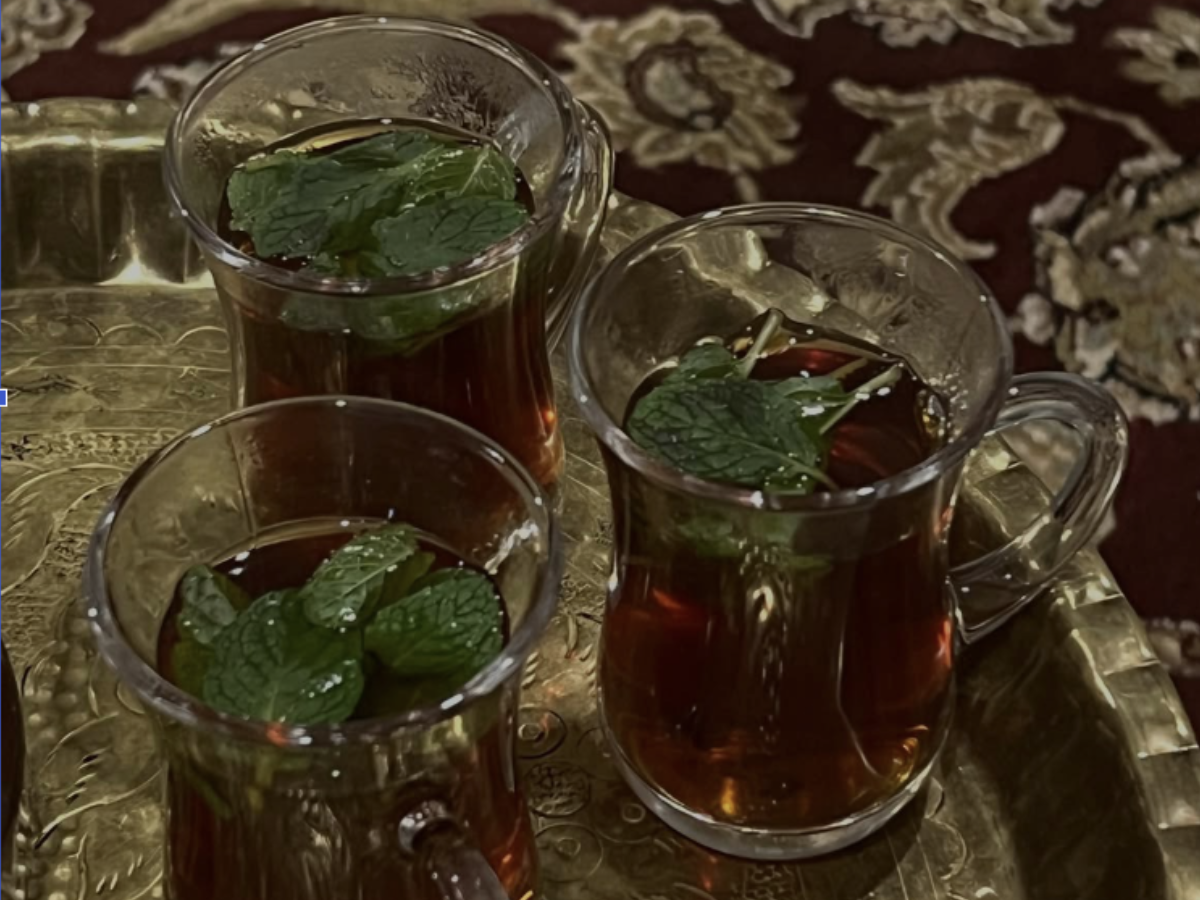
One of the simplest ways to ground is through something many of us already know how to do, making shai bil na’na (mint tea). Smell, in particular, is directly connected to the parts of the brain that store memory and emotion. So when we smell something familiar, like mint tea, our bodies recognize it. It can bring up memories of connection, routine, and being around loved ones. And those memories can signal a sense of safety to the nervous system, without needing to talk about it or consciously process anything.
Ingredients:
4 cups water
A generous handful of fresh mint leaves
2–3 teaspoons loose Ceylon tea or 3 tea bags
Sugar (optional, to taste)
Steps:
Bring water to a boil
Add tea and let it boil briefly (about 1 minute)
Add fresh mint leaves and gently stir (avoid over-boiling to prevent bitterness)
Remove from heat and let steep for about 5 minutes
Strain and pour into a cup, adding fresh mint
Sweeten to taste (optional)
While you drink:
Hold the cup and feel the warmth
Notice the smell of the mint
Pay attention to the taste
Take your time, and let yourself be in the moment
In a time where so much feels heavy, overwhelming, and heartbreaking, regulation doesn’t have to be complicated. Sometimes it looks like returning to what your body already knows, to what your culture has always offered, to small moments of connection that help you keep going.
Written by:Nichole Abdallah, AMFT
Nichole is a second-generation Palestinian-Latina Registered Associate Marriage and Family Therapist at Noor Therapy and Wellness who helps adult children of immigrants reclaim their cultural identities, navigate intergenerational trauma, and find a sense of belonging.
You can book a free consultation with me here: https://calendly.com/therapywithnichole/15-min?month=2025-06